 Skip to content
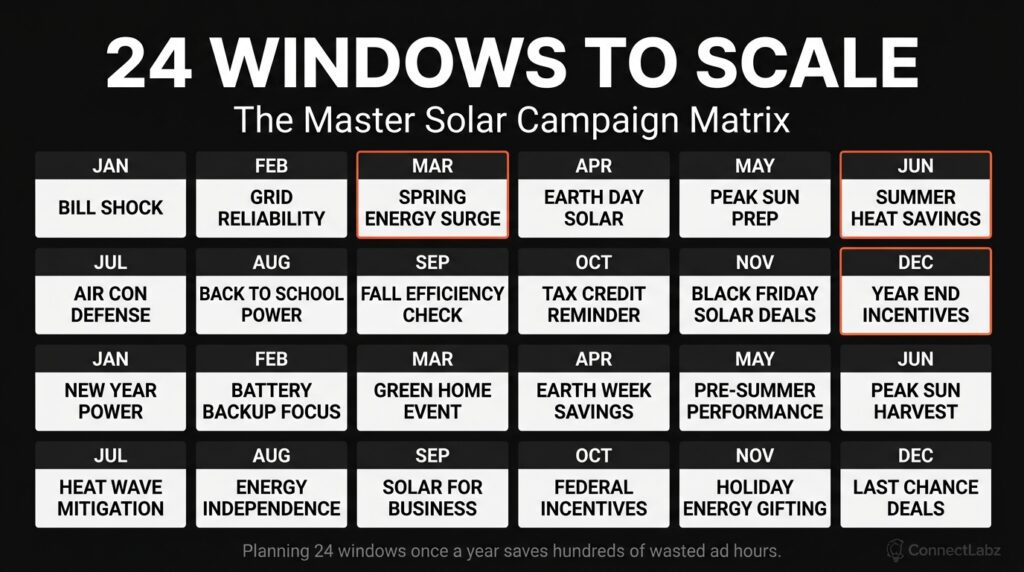
Solar marketing is inherently seasonal, but most solar companies wildly guess and plan their campaigns just a week in advance. Winning companies plan the entire year around rate hikes, tax credit deadlines, utility peaks, and actual homeowner behavior patterns. Stop guessing and use this 24 window calendar.
Key Takeaways
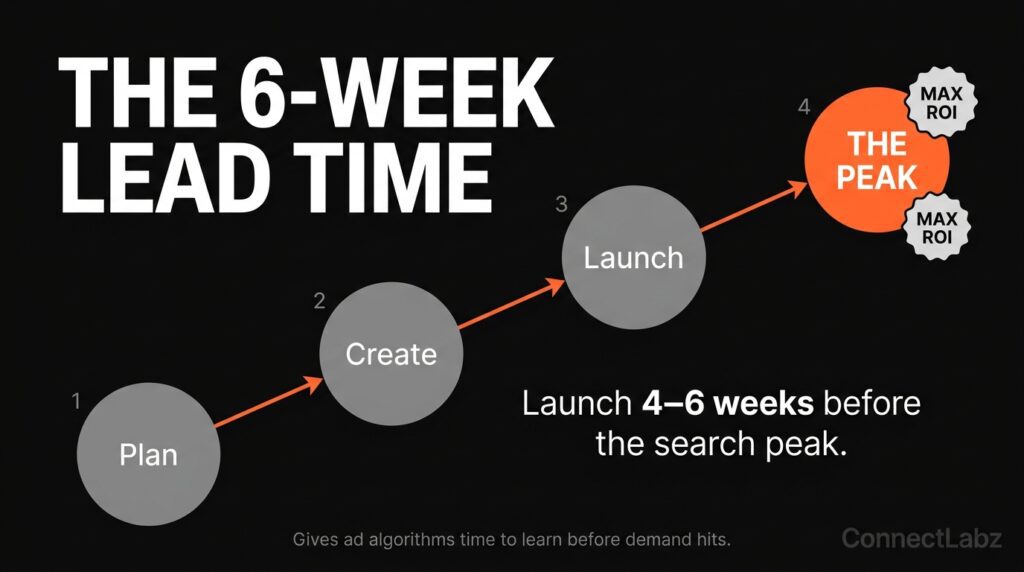
- The very best campaigns launch 4 to 6 weeks before the actual event, not the week of.
- Tax credit deadlines, rate hikes, and seasonal heat waves are the three largest urgency levers you have.
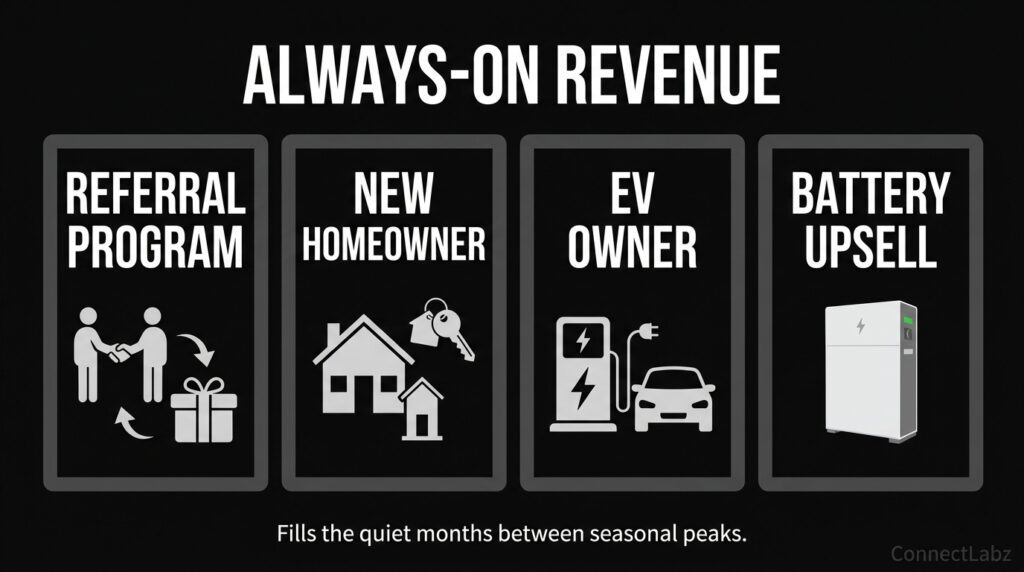
- Ongoing campaigns (like referral, new homeowner, and EV owner) perfectly fill the quiet months.
- Planning the calendar once a year takes one day but saves hundreds of wasted ad hours.
- Retail data confirms that most U.S. consumer spending strictly follows a predictable calendar.
Download the Blueprint
The Solar Growth Blueprint includes the full 24-event calendar with specific hooks, audiences, and ad formats. Download it free.
Why the Calendar Beats the Scramble
A solar calendar is not just a nice-to-have. It is exactly what separates the companies that scramble from the companies that consistently scale. When you plan these 24 windows once a year, every week your team knows exactly what to launch.
The Complete 24-Event Calendar
January to March: Winter and Rate Hikes
January (New Year Energy Goals): Hook: New year, new savings. Lock in your rate. Fix: Target homeowners 30 to 60 with financing-first creative.
Jan-Feb (Winter Bill Shock): Hook: Heating bills are peaking. Here is how to flip the math. Fix: Run bill-shock creative because ad costs are at yearly lows.
February (Tax Season Prep): Hook: Use your refund to go solar with $0 out of pocket. Fix: Target tax filers with a clear refund-to-install frame.
March (Spring Equinox): Hook: More sun, more savings. Solar season begins. Fix: Refresh all your creative with bright spring visuals.
April to June: Peak Season Preparation
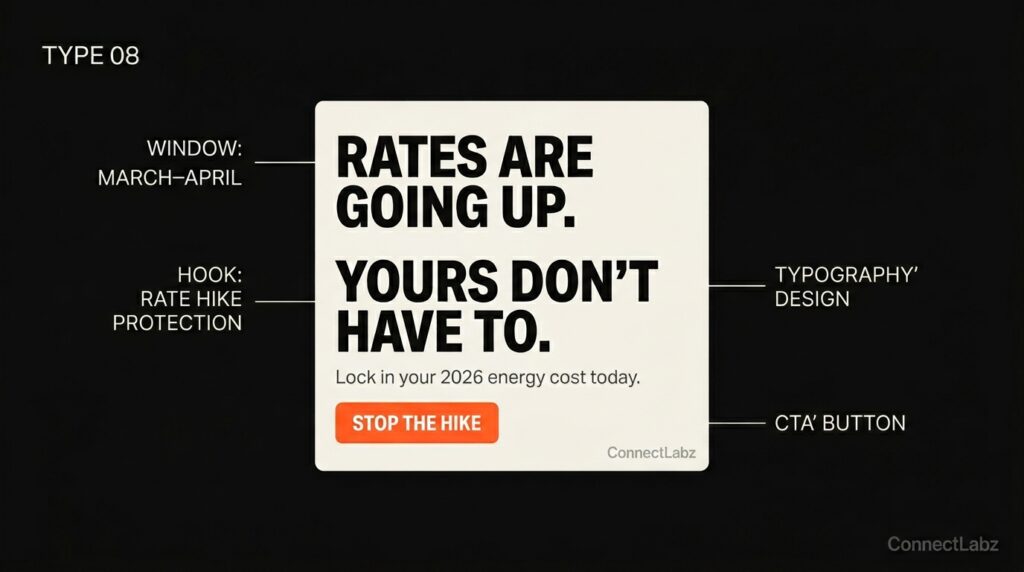
Mar-Apr (Rate Hike Announcements): Hook: Utility raises rates. Your cost stays exactly the same. Fix: Launch this 2 weeks before the announced hike.
April (Earth Day): Hook: Go green and save money. Both at once. Fix: Use eco-conscious targeting and CO2 offset visuals.
Apr-May (Tax Credit Deadline Push): Hook: Federal tax credit available right now. Do not wait. Fix: Reference the federal tax credit page for instant authority.
May (Home Improvement Season): Hook: Solar adds $15K to $30K to your home value. Fix: Target recent home improvement searchers.
May-June (Summer Prep): Hook: Beat the summer bill before it beats you. Fix: Focus on AC-heavy markets and show expected July bill delta.
July to September: High Sun and High Urgency
June-July (Peak Sun Season): Hook: Maximum production. Maximum savings. Fix: Push the “best ROI of the year” angle hard.
July (4th of July): Hook: Energy independence starts directly on your roof. Fix: Use a patriotic angle with flag-and-panel visuals.
August (Back to School): Hook: Lower bills before the school year budget crunch hits. Fix: Target parents 35 to 55 with tight monthly budgets.
Aug-Sep (Fall Install Rush): Hook: Book now. Install entirely before winter. Fix: Show clear install calendar availability visuals.
September (National Preparedness): Hook: Battery backup. Power through the outages. Fix: Focus on storm-prone regions. Make the battery upsell front and center.
October to December: Year-End Push
October (Energy Awareness Month): Hook: How much are you spending? Find out for free. Fix: Lead with a simple savings calculator CTA.
Oct-Nov (Pre-Holiday Savings): Hook: Lower bills before the holiday spending hits. Fix: Lean into budget-conscious targeting.
November (Black Friday / Cyber Week): Hook: Best solar pricing of the entire year. Limited slots. Fix: Treat this as your only true “sale” window. Use a hard deadline.
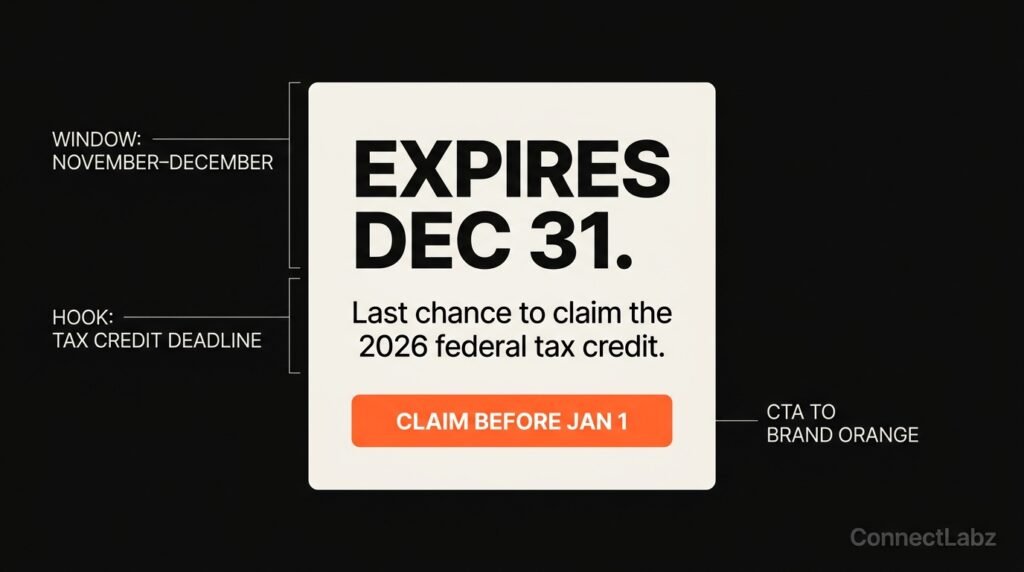
December (Year-End Tax Credit): Hook: Last chance to claim this year’s federal tax credit. Fix: Scale your budget 4 to 6 weeks before December 31.
Ongoing Campaigns (Run All Year)
New Homeowner: Hook: Just bought a house? Lock in your energy cost. Fix: Target recent move-in data continuously.
Referral Program: Hook: Refer a neighbor. Earn $500 to $1,000. Fix: Run to your existing customer list constantly.
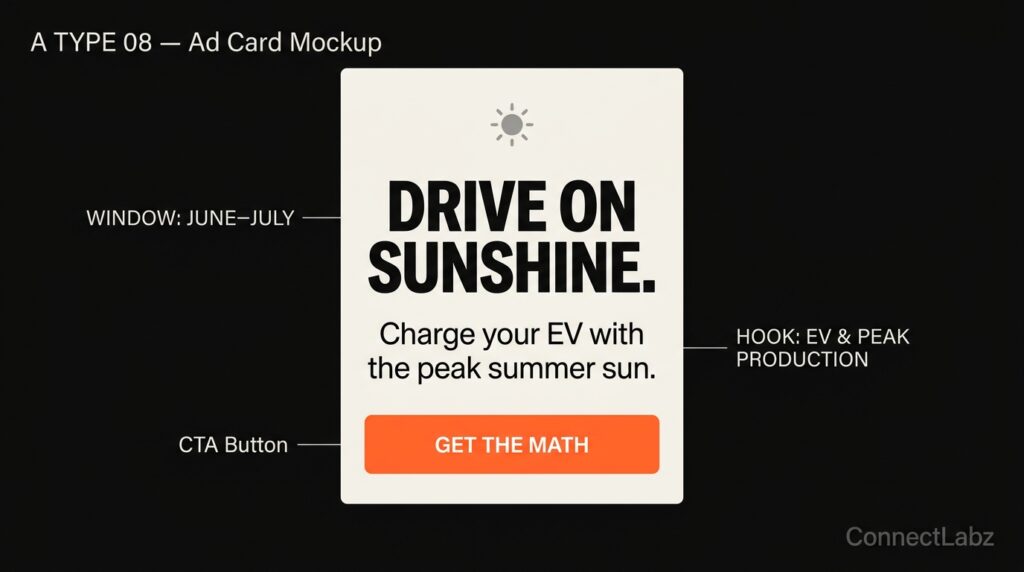
EV Owner Targeting: Hook: Drive on sunshine. Charge your EV with solar. Fix: Target known EV-interested homeowners.
Rate Hike Retargeting: Hook: Rates just went up again. Fix: Retarget site visitors within 30 days of the hike.
Battery Upsell: Hook: Already have solar? Add a battery backup. Fix: Use your existing solar customer list for an LTV play.
Roof Replacement Combo: Hook: New roof + solar = one project, one crew. Fix: Target aging-roof owners with combined savings math.
Allocate Your Spend Across All 24 Windows
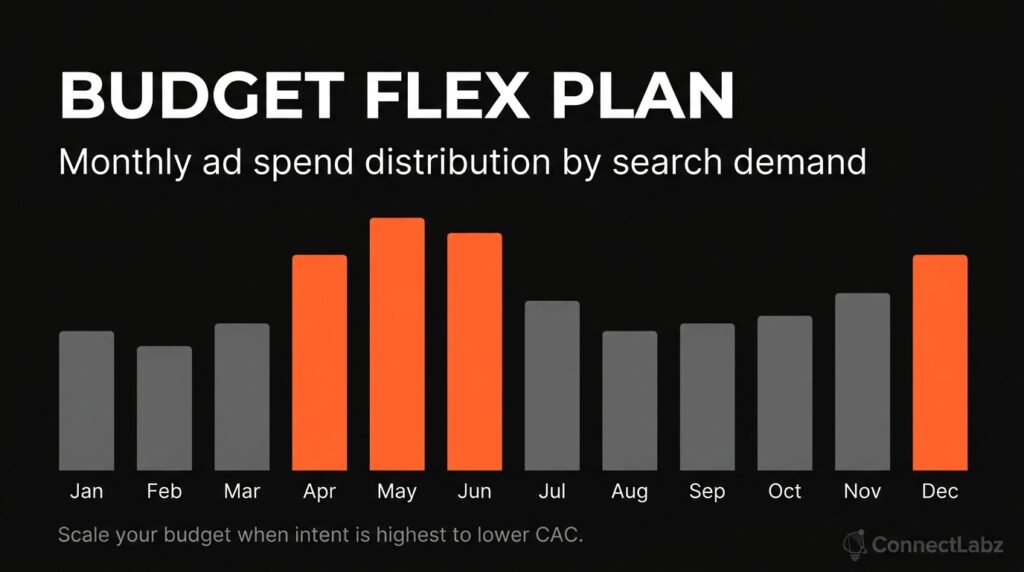
A 24-window calendar only works if your budget actually flexes with it. Run your annual ad spend through our free ad budget planner. It splits the spend across each window by buyer intent and seasonality, so the December tax-credit deadline does not eat the spring rate-hike budget and your bill-shock months get the budget they need to fill summer install slots. Plan once. Let the planner run the year for you.
Frequently Asked Questions
How far in advance should a solar company plan campaigns?
Launch 4 to 6 weeks before each event window. That lets the ad algorithm effectively learn and your creative build massive momentum before the search peak.
What are the biggest annual campaign windows for solar?
Rate hike announcements in spring, peak sun season in summer, and the December tax credit deadline are the three absolute largest.
Should solar companies run ongoing campaigns alongside seasonal ones?
Yes. Referral, EV owner, new homeowner, and battery upsell campaigns perfectly fill the quiet months and drastically lift customer LTV.
Conclusion
A solar marketing calendar is not a nice-to-have. It is the operating system that separates installers who scramble through every quiet month from installers who scale through every season. 24 windows, mapped against demand, launched 4 to 6 weeks ahead of each peak — that single discipline turns a feast-or-famine pipeline into a year-round one. Build the calendar once. Stop chasing this week’s leads. Let demand come to you on schedule.
You have the full calendar. What you likely do not have is a clear read on which windows you already exploit well, which ones you skip entirely, and which ones your top competitor absolutely dominates. A free personalized audit maps all three and cleanly shows you the highest-ROI window to claim first.
Get Your Free Personalized Audit

