 Skip to content
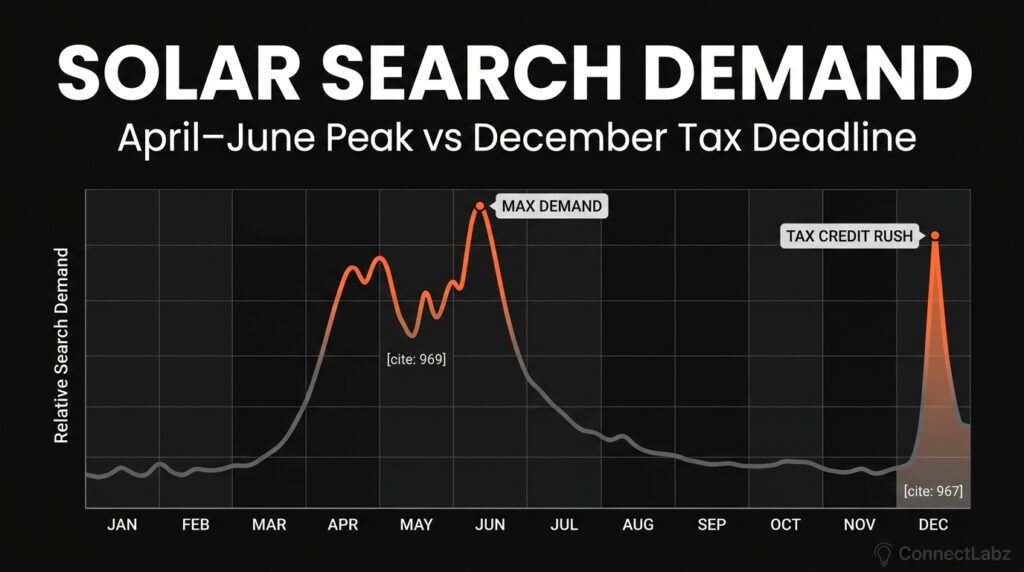
Solar search demand is never flat. It peaks hard in the spring, dips during winter, and spikes aggressively around tax-credit deadlines in December. Companies that align their ad spend to this natural curve pay 30 to 50 percent less per lead than companies that run the exact same budget every month. Match the calendar, and your cost per install drops.
Key Takeaways
- Search demand for solar panels peaks from April to June.
- Battery storage interest spikes in late summer right after storm season.
- Tax credit searches climb sharply from November to December as homeowners rush to claim that year’s credit.
- Winter months have the lowest ad costs. Smart brands build their awareness here.
- Launching seasonal campaigns 4 to 6 weeks before the peak is what earns the cheap clicks.
Download the Blueprint
The Solar Growth Blueprint includes the full seasonal curve plus a 24-event campaign calendar. Download it free.
Why the Seasonal Curve Matters
Homeowner intent shifts based on the weather, their utility bills, and tax deadlines. Running a generic “go solar” ad in January competes against high heating bills. Running it in December competes against tax deadlines. Adjusting your message to match what the homeowner is already feeling makes your marketing cheaper and much more effective.
Month-by-Month Campaign Breakdown
January to February: Winter Bill Shock
Heating bills peak. Homeowners feel the electric cost even if they heat with gas. Ad costs are at their absolute lowest of the entire year.
Fix: Run bill-shock creatives to cold audiences and build retargeting lists for the big spring push.
March to April: Rate Hike and Spring Equinox
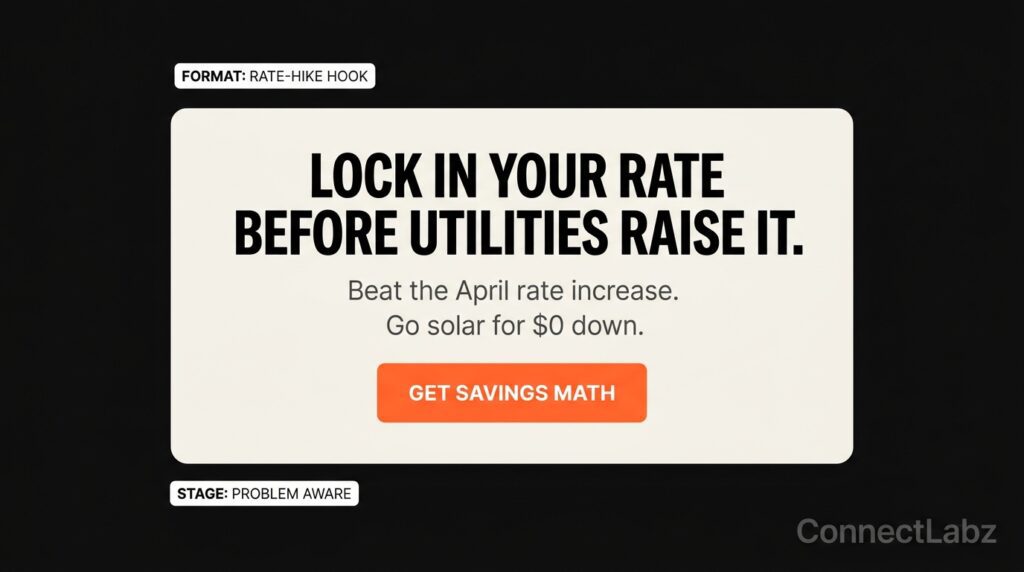
Utilities announce their annual rate increases. Search demand for solar panels starts climbing hard.
Fix: Launch rate-hike and “lock in your rate” campaigns 4 weeks before the utility announcements.
April to May: Tax Credit Awareness
The federal investment tax credit stays a top driver. Homeowners who file taxes naturally think about refunds and energy.
Fix: Run a “use your refund to go solar” angle straight through mid-May.
May to June: Home Improvement Season
Homeowners are already thinking about upgrades. Solar adds $15K to $30K to home value.
Fix: Run a home-value angle and specifically target homeowners with higher utility spend.

June to July: Peak Sun and Peak Installs
Maximum production means maximum savings math. This is when your best ROI calculators hit the hardest.
Fix: Push the “maximum production” angle and show real app screenshots of customer savings.
July to August: Heat Wave Bill Shock
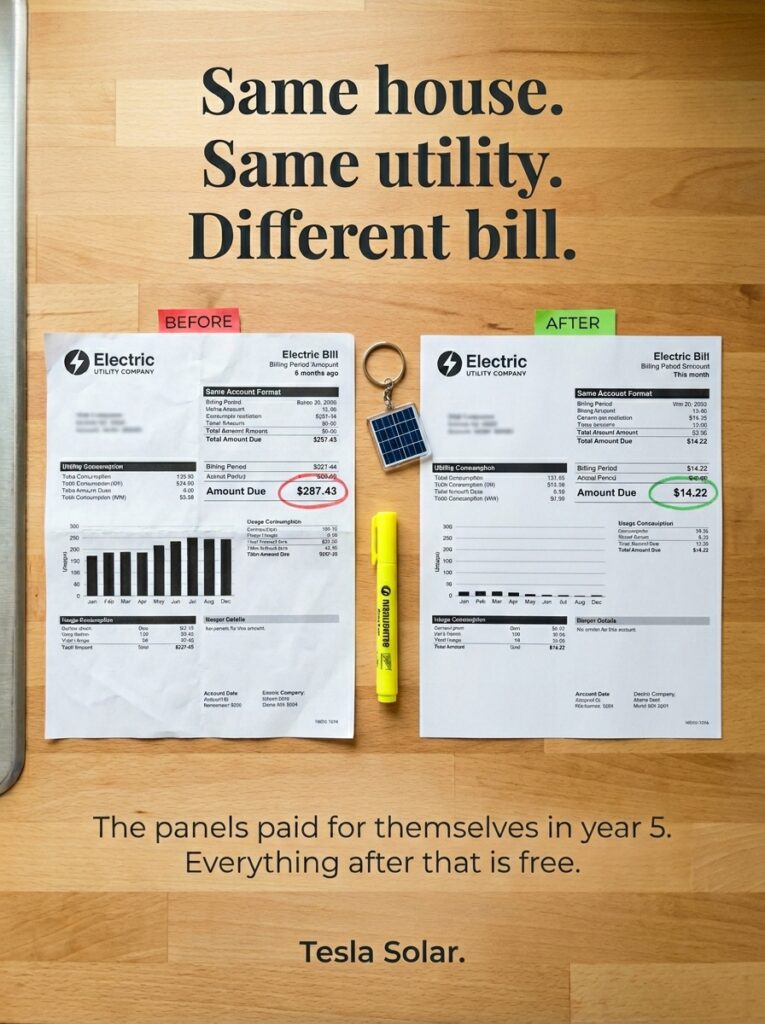
AC-heavy markets see record bills. Battery storage searches start climbing after the storm season hits.
Fix: Split your budget evenly between bill-shock creatives and battery upsell ads.
August to September: Fall Install Rush
“Book now, install before winter.” Last-window urgency is incredibly real.
Fix: Run Fall Install Rush ads heavily featuring install-calendar visuals.
September to October: Storm and Preparedness
Battery backup interest spikes in storm-prone markets. National Preparedness Month is a very natural hook.
Fix: Lead with battery backup creatives and retarget solar-curious homeowners from earlier in the year.
November to December: Tax Credit Deadline
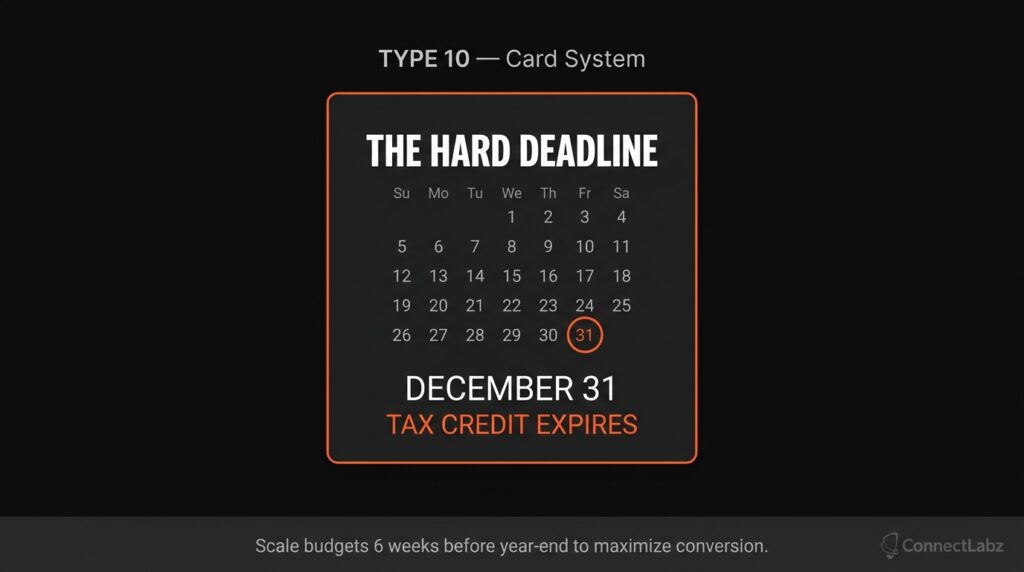
“Last chance to claim this year’s federal tax credit” is the strongest urgency lever of the year.
Fix: Scale your budget 4 to 6 weeks before year end with a hard deadline creative.
Plan the Year Around Your Stage of Business
Solar installers in their first year should not chase every seasonal window. Established companies with multi-year pipeline data should not be skipping any. Run your business through our free growth strategy planner. It maps the seasonal curve above against your stage, average install value, monthly capacity, and current pipeline data, then tells you which 5 to 7 windows to actually fund this year and which to skip without losing real revenue.
Frequently Asked Questions
When is the best time of year to advertise solar?
Spring is the highest demand window (April to June) but winter (November to February) has the lowest ad costs. Run awareness in the winter and convert in the spring.
Should solar companies advertise year round?
Yes, but with different angles. Use winter for awareness, spring for conversion, summer for peak production angles, and December for tax credit urgency.
What drives December solar searches?
The federal Investment Tax Credit deadline. Homeowners rushing to qualify for that year’s credit spike both searches and close rates.
Conclusion
Solar is seasonal but it is never silent. The companies that win plan the curve six weeks ahead, shift their creative with the homeowner’s mental state at each point in the year, and buy cheap winter clicks to close expensive spring contracts. Match the calendar and your cost per booked appointment drops at every peak — while your competitors keep paying full price for the same homeowners you already warmed up in February.
You now have the seasonal curve. What you probably do not have is a plan tied directly to your current pipeline, ad spend, and local utility behavior. A free personalized audit benchmarks your seasonal performance and shows which exact windows you are leaving on the table.
Get Your Free Personalized Audit

