 Skip to content
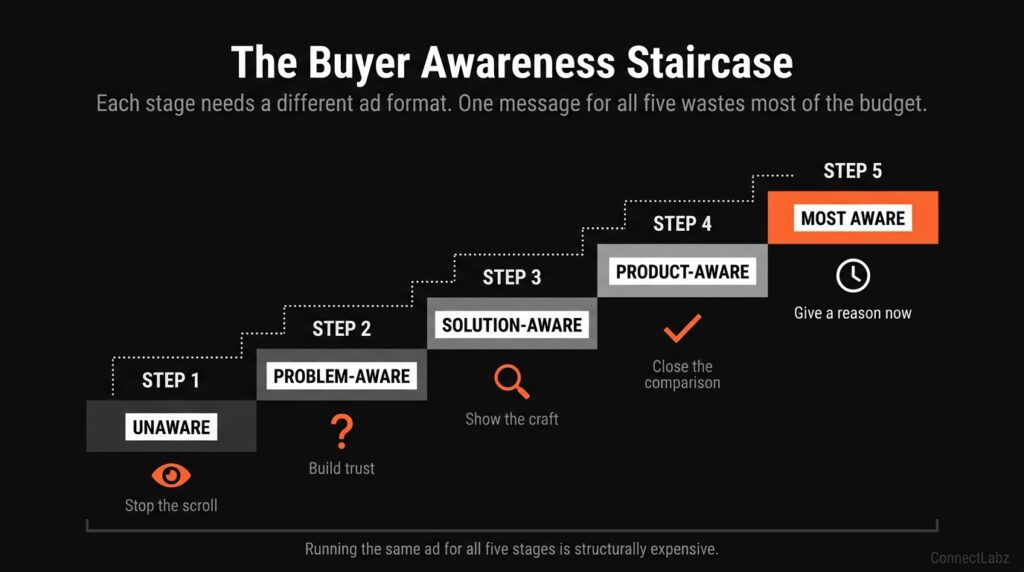
Why do some jewelry ads sell out a collection in 48 hours while others run for six weeks at $40 per click? Rarely creative quality. Almost always format. The best jewelry ad in any given month beats the worst by 5 to 10 times. Not because one is more beautiful. Because it was built for the right buyer at the right stage. Most brands run two or three formats, which means they are working with one decent ad and one mediocre one, with no way to tell which is which. Different buyers need different messages. Running one format for all of them is not just inefficient, it is structurally expensive.
Key Takeaways
- The top ad in any month beats the worst by 5 to 10 times. Most brands are running the worst ad and do not know it, because they do not have enough creatives to find the winner.
- Cold, warm, and ready-to-buy audiences need completely different messages. Running the same format for all three wastes most of the budget.
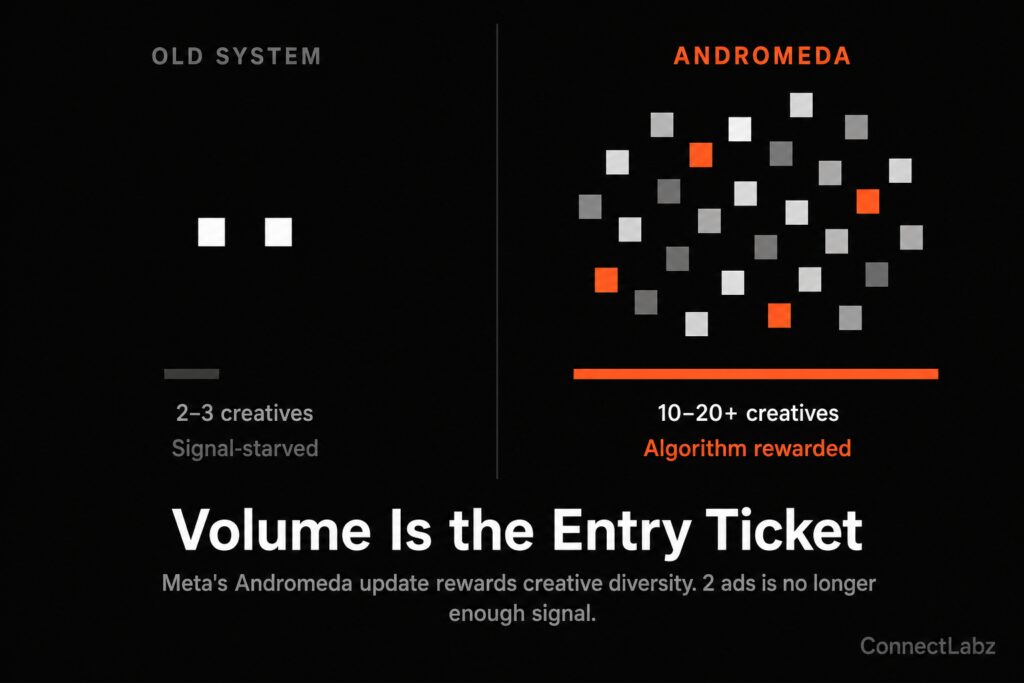
- Meta’s Andromeda update has shifted the math. Ad accounts feeding the algorithm with 10+ creatives across buyer stages now beat accounts running 2 to 3 creatives, even at lower budgets. Volume and diversity are what the system rewards.
- Unaware buyers need something unexpected to stop the scroll before any product claim lands. Product-first ads do not work for this audience.
- Ready-to-buy buyers need one thing. A concrete reason not to wait. A deadline, scarcity, or a retargeting ad showing exactly what they looked at.
DOWNLOAD THE FULL BLUEPRINT
All 16+ ad formats, organized by buyer stage with copy examples and creative guidance, are covered in full in the Jewelry Brand Growth Blueprint.
Facebook Ads Basics & Strategy
The Andromeda Shift
Meta’s Andromeda update rebuilt the ad delivery system to reward creative variety and punish creative scarcity (see business.meta.com for Meta’s own delivery overview). Under the old system, an account could run two strong ads for months and the algorithm would optimize inside that small pool. Under Andromeda, two ads is signal-starved. The algorithm needs breadth to find the pocket of buyers that respond to a given hook. Creative volume is no longer a nice-to-have. It is the entry ticket.
Why Buyer Stage Determines Everything
A cold scroller, someone actively researching engagement rings, and a man three days from Mother’s Day with nothing bought yet are not the same person. Running the same ad format for all three is like delivering the same pitch to a stranger, an interested lead, and a buyer with a credit card already out. What each stage actually requires looks different enough that mixing them produces results that look unremarkable across the board.
Formats for Cold Audiences
Unaware Buyers. Stop The Scroll Before Selling Anything
`Scroll-Stopping Visual: A composition so unexpected the thumb stops before the brain has categorized what it is looking at. Architectural lighting, an unusual angle, imagery that makes the piece feel less like product photography and more like something from a museum case.
Absurd Imagery: A diamond ring against a crime scene evidence board. Copy: “Guilty. Excessive Shine.” The incongruity breaks the pattern before the viewer decides whether jewelry is even relevant to them. Stopping the scroll comes before selling anything.
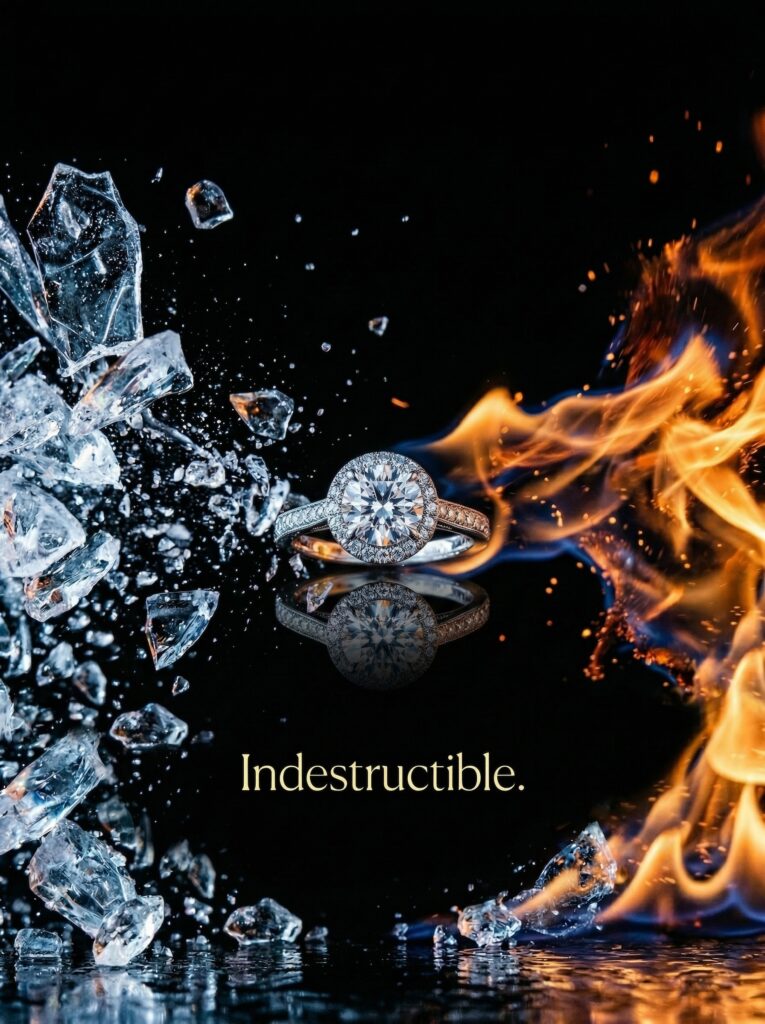
AI-Generated Concept: A ring inside burning flame. A bracelet on a lunar surface. Images obviously impossible in a photograph, creating curiosity before any product claim is made.
Brand Story Visual: Not about a specific piece. About the world the buyer would live in as a customer. The aesthetic, the lifestyle, the version of themselves they might become. Builds the brand before asking for anything.
Problem-aware Buyers. Prove The Brand Is Worth Trusting
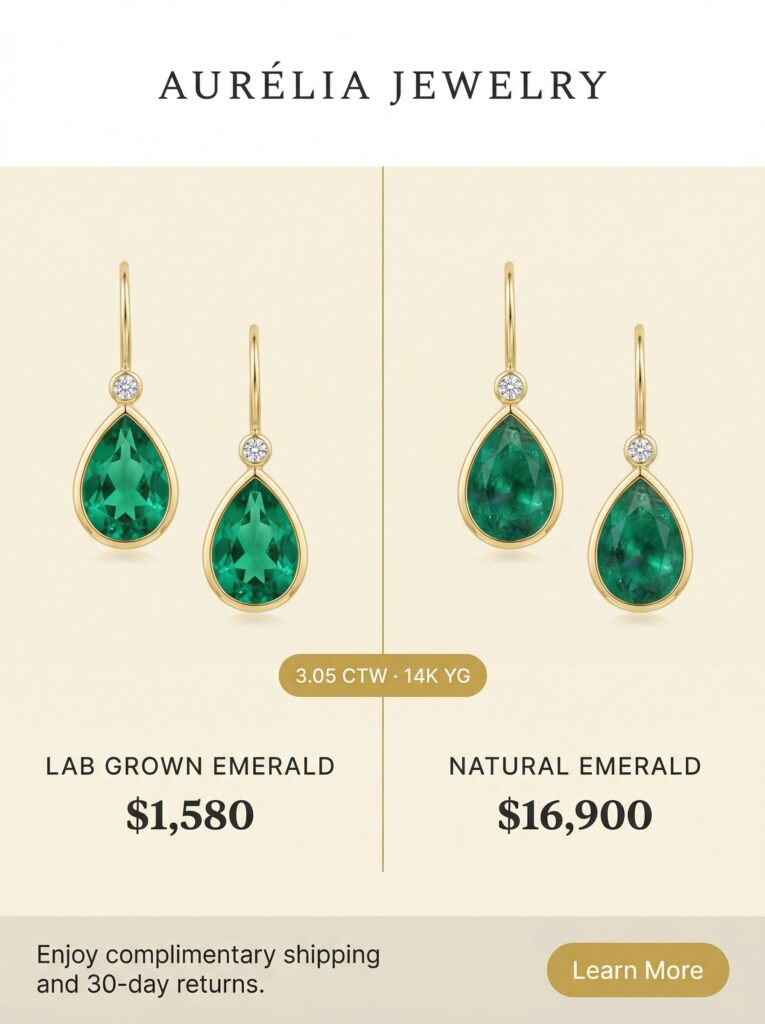
Comparison / Myth-Bust: Two images side by side. Lab-grown emerald at $1,580 versus natural emerald at $16,900 with the same visual quality. Buyers who have been quietly skeptical about lab-grown find their uncertainty settled in one frame. Transparency does the selling. The Gemological Institute of America has made lab-grown grading standard, which means the trust signal is public.
Typography / Contrarian Statement: Bold copy only. No product shown. “Stop buying jewelry that looks like everyone else’s.” This format self-selects the right buyer and repels the wrong one. That is a more useful outcome than trying to appeal to everyone.
Wrong Gift Narrative: “You spent $200 on something she smiled at politely and never wore again.” Specific enough to be uncomfortable. Funny enough to share. Converts well for gift occasions by meeting the buyer exactly at the discomfort they are trying to avoid.
Formats for Warm & Ready-to-Book Audiences
Solution-aware Buyers. Demonstrate What The Product Is Worth
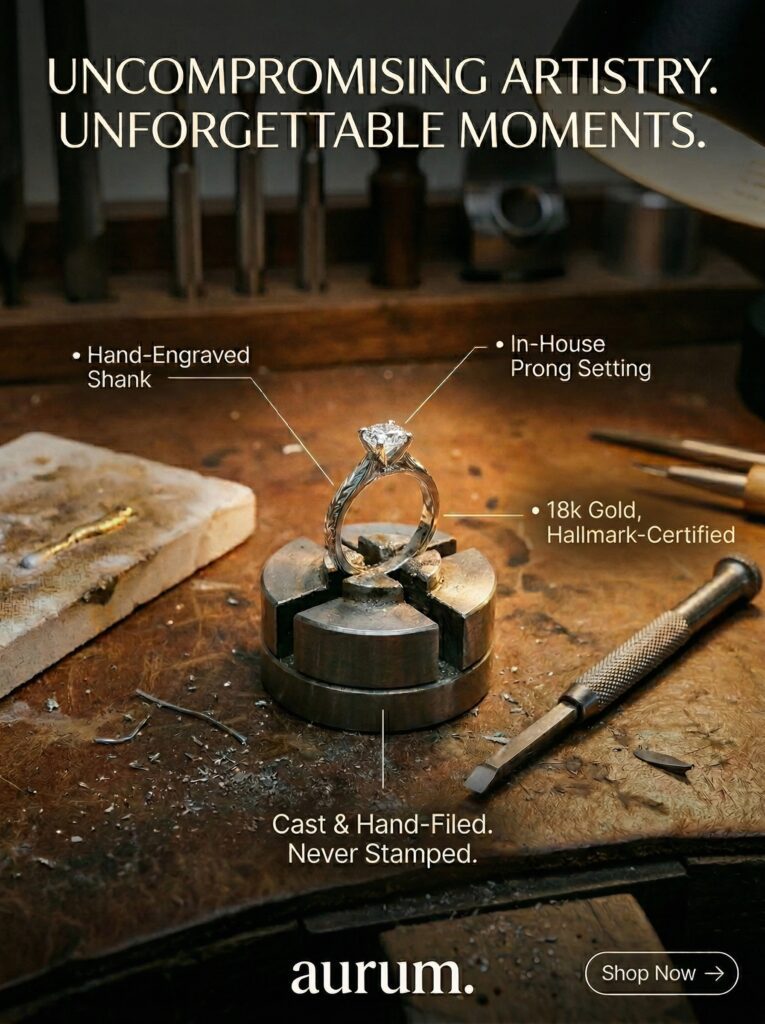
Craftsmanship Deep-Dive: The bench jeweler at work. Metal poured. A stone set by hand. No copy needed. The work argues more convincingly than any product claim because the viewer is watching the proof happen in real time.
Material Spotlight: Specific and educational. Not “quality materials” but the actual difference between 14k and 18k gold in wearability, why Montana sapphires look different from heat-treated stones, what conflict-free sourcing means in practice.
3D Render / Art Direction: The piece in a context photographs cannot create. A ring in a burning galaxy. A bracelet embedded in ice. These images signal creative confidence and brand investment in a way straightforward product photography does not.
Product-aware Buyers. Close The Comparison
Social Proof Feature: One customer review in large text over a lifestyle image of the piece. Real words from someone who bought it. The hesitation most buyers carry (“is this actually as good as it looks?”) gets answered by someone who already found out.
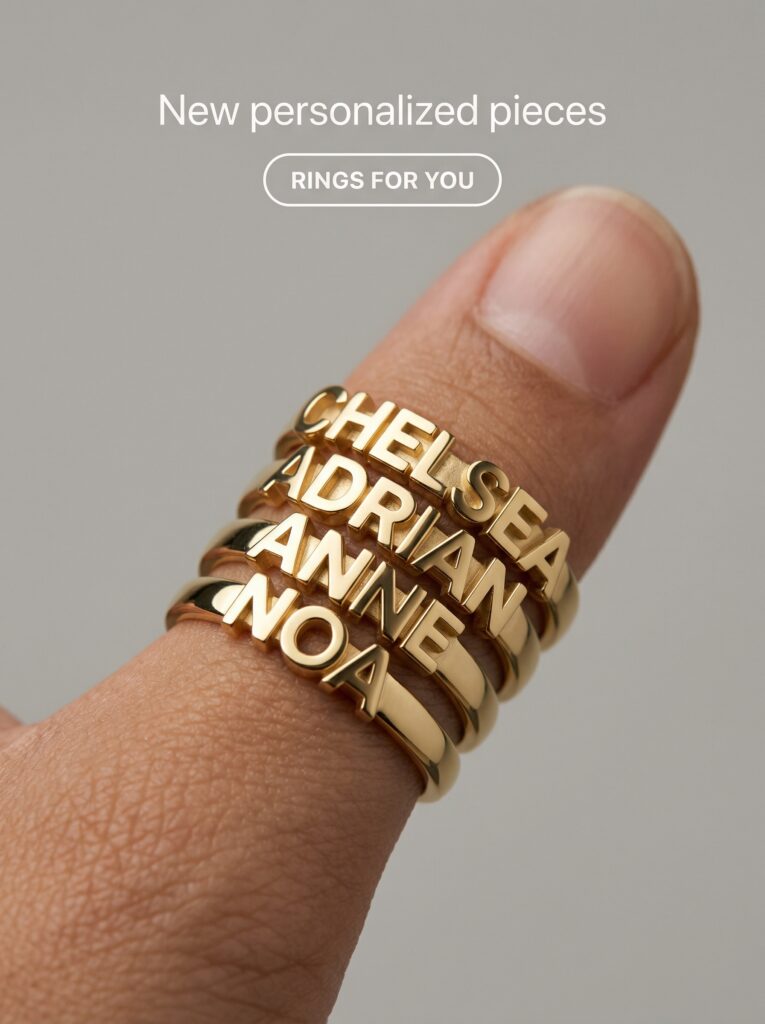
Personalized Feature: Name necklaces. Initial rings. Custom engraving. Personalization removes the comparison problem entirely. A custom piece cannot be found cheaper somewhere else.
Founder Story: The person behind the brand, where the idea came from, what drives the craft. At equal price points, the brand where the buyer feels a human connection wins. This format converts the undecided.
Most-aware Buyers. Give Them A Reason Not To Wait
Occasion Trigger: “Valentine’s Day is 12 days away. Order by February 8th for guaranteed delivery.” Buyers who have been putting off the decision get a specific date. That date converts in a way general brand advertising does not.
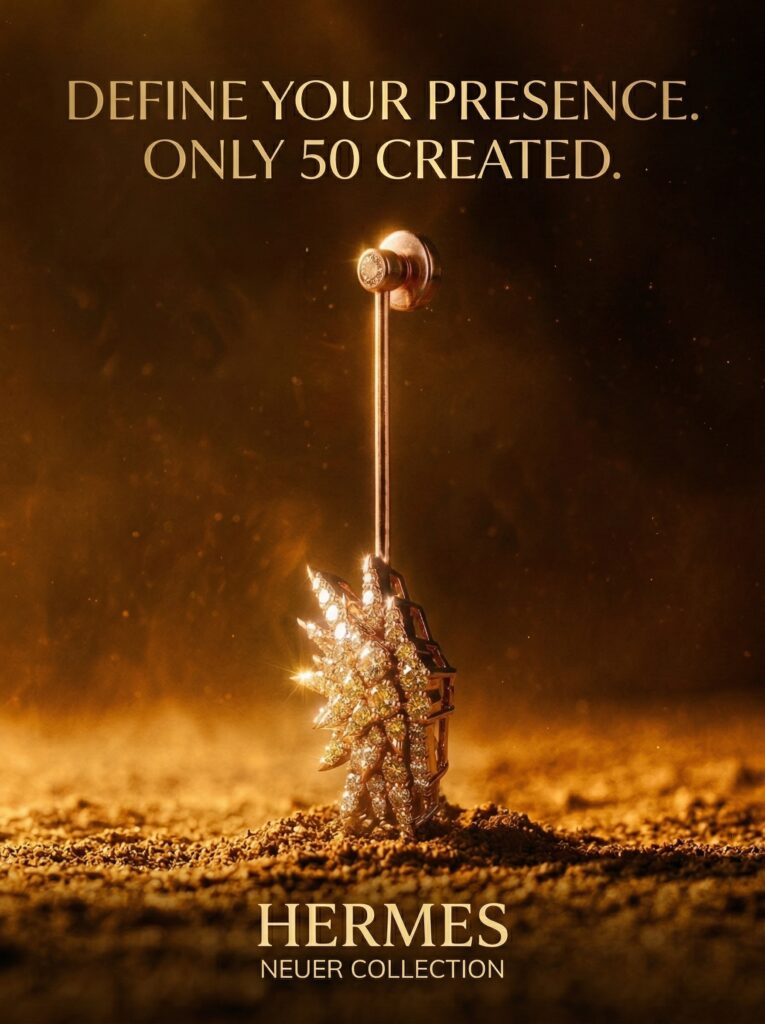
Limited Edition: “Only 50 pieces created.” Scarcity drives decisions without requiring discounts. It requires being true.
Retargeting Carousel: The specific pieces a visitor looked at, shown back to them. Not the homepage. Not best sellers. The exact items they spent time with. This format consistently produces the highest return on ad spend in jewelry ecommerce.
Seasonal Deadline: “Shipping cutoff. 3 days.” No imagery required. Just a fact with time attached.
How Many Formats to Test
Most growing jewelry brands should run 10 to 20 simultaneous creatives. The instinct is that this needs a large production investment. It does not. AI-generated concepts, user-generated content, typography ads, screen recordings of product pages. Creative volume does not require a photo studio. It requires a decision to test more. With Andromeda, accounts that commit to volume end up with lower CPMs and better reach than accounts that polish two or three ads.
Frequently Asked Questions
What type of Facebook ad works best for jewelry?
No single format works best across all audiences. Cold audiences respond to lifestyle visuals and scroll-stopping concepts. Warm audiences respond to social proof and retargeting carousels. Ready-to-buy audiences respond to deadlines and limited availability. A healthy jewelry ad account runs all of these at the same time.
How much should a jewelry brand spend on Facebook ads?
How the budget is distributed matters more than the total. A brand spending $2,000/month on two creatives often gets worse outcomes than a brand spending the same on fifteen, because the latter finds winners faster and puts budget behind them.
Should jewelry brands use video or image ads?
Both, matched to purpose. Short video (15 to 30 seconds) beats static for cold audiences, especially craftsmanship content. Static images win for retargeting and conversion-stage campaigns.
Conclusion
The brands winning jewelry advertising are not running better ads. They are running more of them, matched to the right buyer at the right stage. That combination (format discipline and creative volume) is what separates a 3% CTR from an 8% one and a 15% repeat rate from a 35% one. The format library is the strategy. Build it on purpose.
Get access to the Jewelry Brands creative ads swipe file
Running the wrong format for your audience is one of the most common reasons jewelry ad spend underperforms. We will audit your current creative strategy, find which awareness stages you are missing, and show you exactly which formats to add and test first.

