 Skip to content
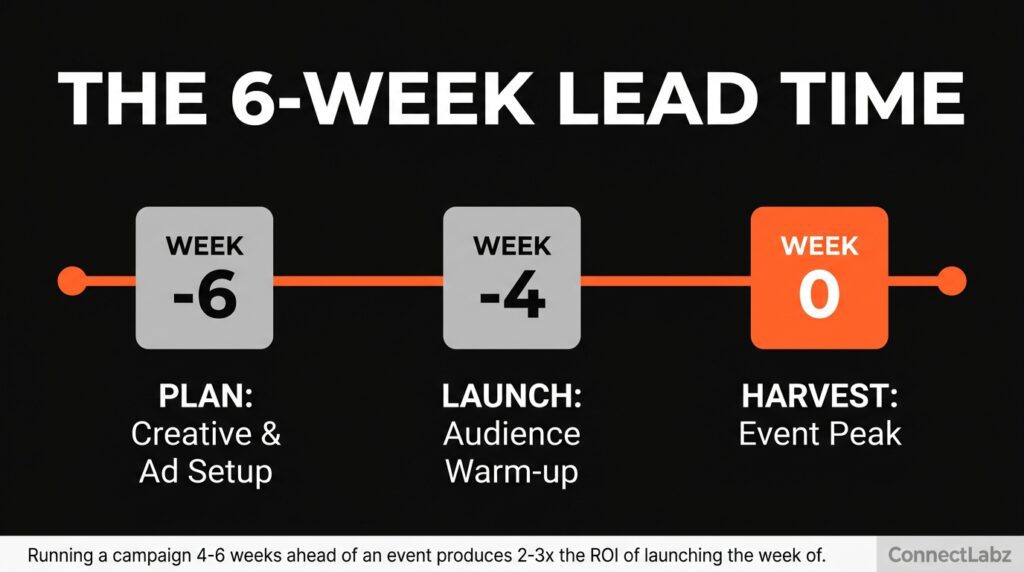
Businesses that plan campaigns 4-6 weeks ahead outperform businesses that scramble the week before every holiday. The campaign windows below are the backbone of every small business marketing calendar.
Key Takeaways
- Running a campaign 4-6 weeks ahead of an event produces roughly 2-3x the ROI of launching the week of.
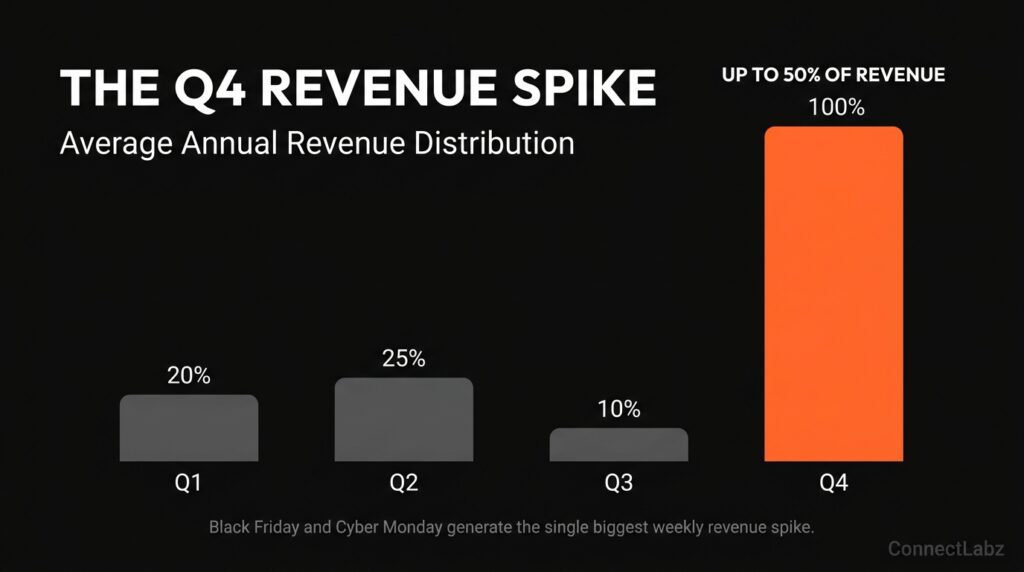
- Black Friday generates the biggest weekly revenue spike.
- Ongoing campaigns (birthdays, milestones) produce the highest ROAS of any segment.
Download the Blueprint
The full 12-month campaign calendar lives inside the ConnectLabz Business Growth Blueprint. Download it free.
The Seasonal Windows
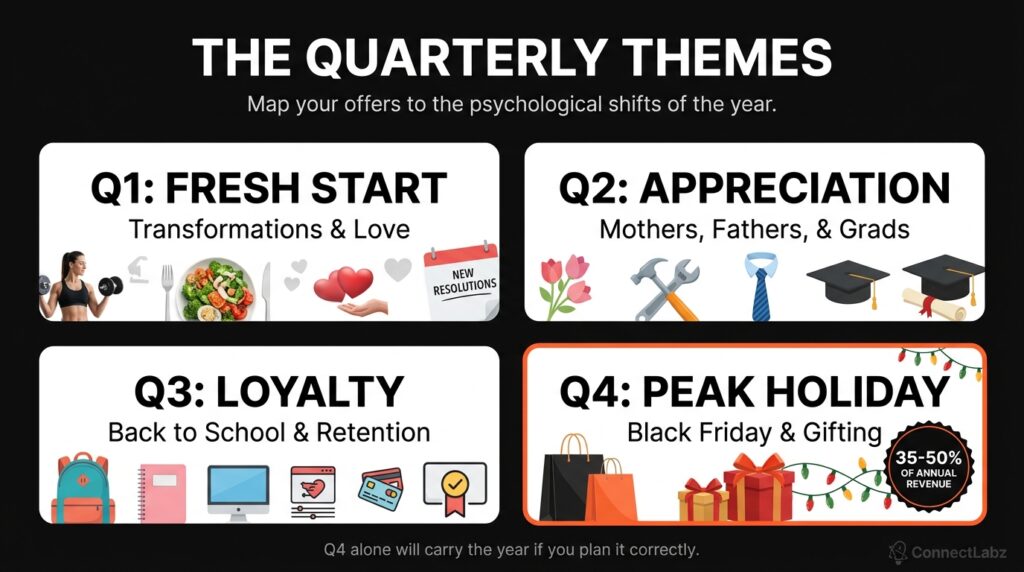
Q1: Fresh Start and Love (Jan-Mar)
January: New Year transformation angles. February: Valentine’s Day. March: International Women’s Day.
Fix: Q1 is your highest-intent window of the year for transformation buyers. Be specific.
Q2: Appreciation and Milestones (Apr-Jun)
May: Mother’s Day and Graduation Season. June: Father’s Day. May-August: Wedding Season.
Fix: Q2 is gifting-driven. Plan 5-6 weeks ahead with gift cards.
Q3: Summer and Back to School (Jul-Sep)
July: Mid-Year push. August-September: Back to School.
Fix: Q3 is historically the softest quarter. Run mid-year loyalty campaigns here, not prospecting.
Q4: Holiday and Peak (Oct-Dec)
October: Early Holiday Teasers. November: Thanksgiving and Black Friday. December: Christmas and Peak Gifting.
Fix: Q4 alone will produce 35-50% of your annual revenue if you plan it correctly. Start building the creative in August.
Allocate Your Annual Spend Across the 20 Windows
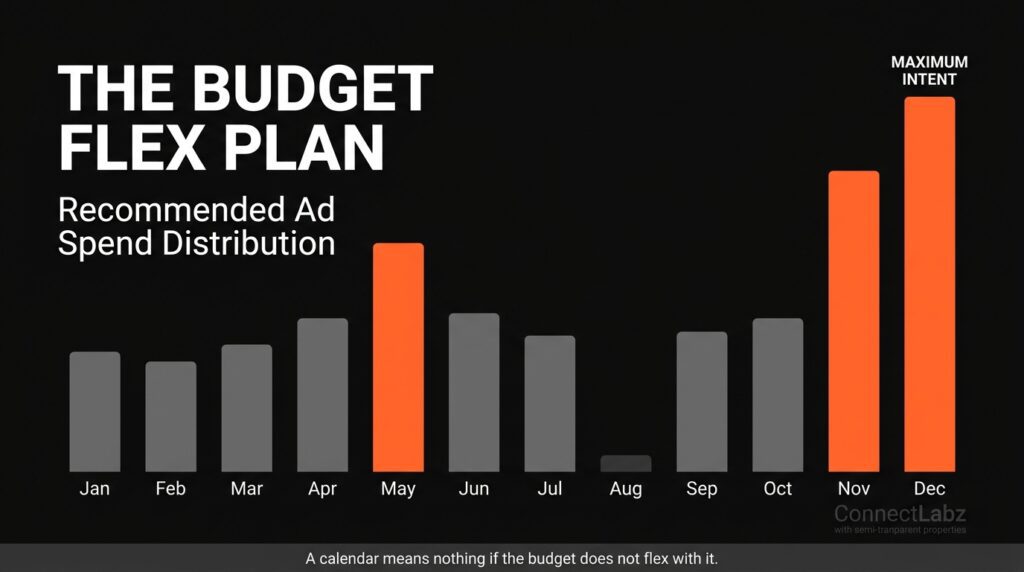
A calendar means nothing if the budget does not flex with it. Q4 should not be funded the same as Q3. Run your annual ad spend through our free ad budget planner. It distributes your budget across all 20 campaign windows by buyer intent and seasonality, so Black Friday gets what it deserves, Q3 does not bleed money you need for December, and your slowest months become brand-building windows at the lowest CPM of the year.
Frequently Asked Questions
How far ahead should I plan each campaign?
4-6 weeks ahead of the event date for creative, ad setup, and email sequences. 8-10 weeks ahead for Q4 campaigns.
Should I run every one of the windows, or pick the ones that fit my business?
Pick 8-12 that map to your customer base and run them consistently.
Conclusion
The difference between a scrambling business and a compounding one is a calendar. Twenty windows, mapped against demand, planned 4 to 6 weeks ahead, executed with specific angles for specific segments. Businesses that build this rhythm stop depending on hero months and start compounding every month. Map the year now, before the next high-intent window opens and closes without you in it.
We will map your customer profile against the full calendar and hand you a prioritized campaign plan for the next 90 days.
Get Your Free Personalized Audit

